The Hidden Foundation of Discovery
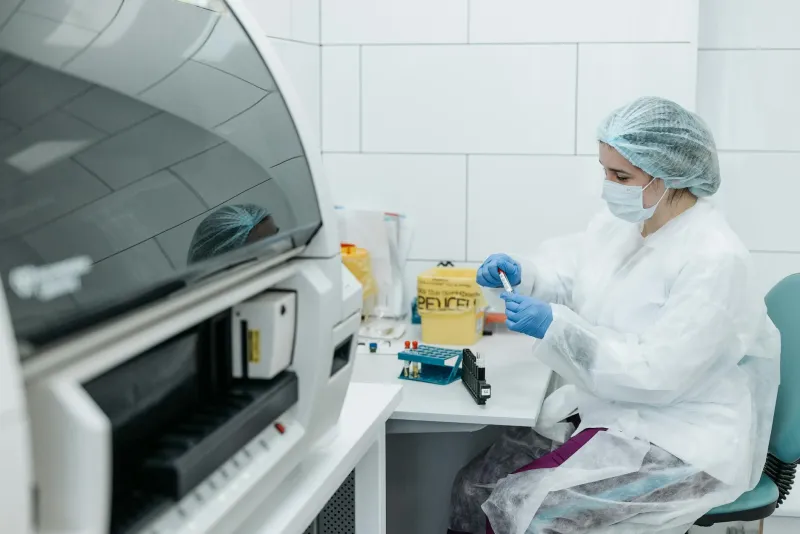
In the gleaming corridors of the Francis Crick Institute, behind the polished facades of Oxford's research departments, and within the bustling laboratories of NHS trusts across Britain, a crucial workforce operates largely unnoticed. Laboratory technicians—the skilled professionals who calibrate instruments, maintain cell cultures, troubleshoot equipment failures, and ensure experimental protocols run smoothly—represent the invisible backbone of UK scientific enterprise.
Yet despite their indispensable contributions, these specialists remain conspicuously absent from academic papers, research grants, and public recognition. This systematic oversight threatens not merely individual careers, but the very foundation of British scientific competitiveness.
The Expertise Gap Widens
Recent analysis of UK research institutions reveals a troubling pattern: whilst universities invest heavily in recruiting star academics and purchasing cutting-edge equipment, technical support roles face chronic underfunding and poor career progression prospects. The consequences extend far beyond individual dissatisfaction.
"When experienced technicians leave, they take decades of institutional knowledge with them," explains Dr Sarah Henderson, who manages laboratory operations at a leading Russell Group university. "These are people who know exactly why certain protocols work in our specific environment, who understand the quirks of our equipment, and who can solve problems that would stump a newly-minted PhD."
This brain drain particularly affects specialised fields requiring sophisticated technical expertise. Mass spectrometry facilities, electron microscopy suites, and genomics laboratories depend heavily on technicians who possess rare combinations of theoretical knowledge and practical experience. When these professionals migrate to industry—often doubling their salaries in the process—research institutions struggle to replace their capabilities.
Cultural Hierarchies and Academic Snobbery
Britain's research culture perpetuates a rigid hierarchy that places theoretical contributions above practical expertise. Principal investigators receive credit for discoveries whilst technicians who enabled the work remain unnamed in publications. This academic apartheid reflects broader cultural biases within UK higher education.
"There's an implicit assumption that technical work is somehow less intellectual," observes Professor Michael Thompson, who has advocated for technician recognition throughout his career. "But the reality is that our best technicians often understand experimental systems better than the postdocs nominally running projects."
This dismissive attitude manifests in multiple ways: technical staff excluded from research meetings, limited opportunities for professional development, and minimal input into experimental design despite their superior practical knowledge. The cumulative effect drives talented individuals away from academic research towards industry positions that offer better compensation and recognition.
The Innovation Multiplier Effect
Technicians contribute far more than routine maintenance and data collection. Their deep understanding of experimental systems often leads to crucial insights that enable breakthrough discoveries. They identify when results seem anomalous, suggest protocol modifications that improve reliability, and develop novel approaches to technical challenges.
Consider the development of CRISPR gene-editing techniques: whilst academic papers celebrate the theoretical breakthroughs, laboratory technicians played crucial roles in optimising protocols, troubleshooting delivery systems, and scaling up applications. Their contributions remain largely invisible despite being essential to translating concepts into practical tools.
Similarly, Britain's COVID-19 testing infrastructure depended heavily on laboratory technicians who rapidly adapted existing protocols, maintained quality standards under enormous pressure, and ensured accurate results during the pandemic's most critical phases. Yet public recognition focused almost exclusively on clinical researchers and epidemiologists.
International Competitiveness at Risk
Other nations recognise technical expertise as a strategic asset requiring investment and cultivation. Germany's dual education system produces highly skilled laboratory technicians through rigorous apprenticeship programmes. Switzerland offers clear career progression pathways that retain technical talent within research institutions. The Netherlands has established professional recognition schemes that acknowledge technical contributions to scientific discovery.
Britain risks falling behind as international competitors invest in technical infrastructure whilst UK institutions continue treating technicians as expendable support staff. This short-sighted approach undermines long-term research capacity and innovation potential.
A Blueprint for Change
Addressing this crisis requires systematic reforms across multiple dimensions. Research councils must mandate technician co-authorship on papers describing work they enabled. Universities need to establish clear career progression pathways for technical staff, including opportunities for continuing education and professional development.
Funding bodies should recognise technical innovation through dedicated grant schemes and awards. The recent establishment of the Technician Commitment—a sector-wide initiative to improve technician careers—represents progress, but implementation remains inconsistent across institutions.
"We need to fundamentally rethink how we value different types of expertise," argues Dr Jennifer Walsh, who coordinates technician development programmes. "Technical mastery deserves the same respect as theoretical insight."
Preserving Scientific Excellence
Britain's scientific reputation depends not merely on brilliant minds generating novel ideas, but on skilled hands capable of testing, refining, and implementing those concepts. Laboratory technicians represent the crucial link between theoretical possibility and practical achievement.
Recognising their contributions isn't merely a matter of fairness—it's essential for maintaining the UK's position as a global research leader. The invisible workforce that enables discovery deserves visibility, respect, and investment commensurate with their indispensable role in advancing human knowledge.
The future of British science depends on acknowledging that breakthrough moments emerge from collaborative expertise spanning theoretical insight and practical mastery. Until we properly value both components, we risk undermining the very foundation of scientific excellence.