The Magnification Divide
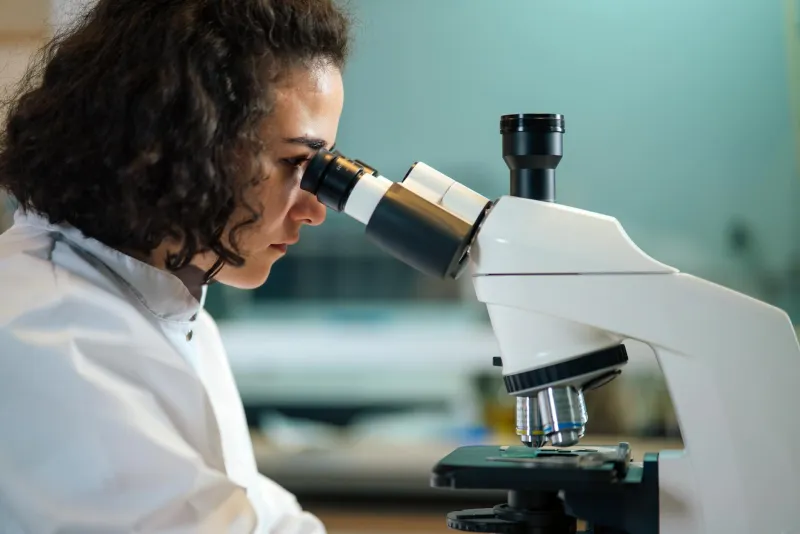
Professor Lisa Hartwell peers through the viewing chamber of her transmission electron microscope, frustrated by the grainy images that would have impressed researchers two decades ago but now compromise her team's chances of publication in top-tier journals. The 1998 JEOL instrument at her Northern England university represents both the backbone of her materials science research and its greatest limitation.
"We're trying to compete internationally with equipment that was state-of-the-art when Tony Blair was Prime Minister," Hartwell observes, adjusting parameters that should be automatic on modern systems. "Meanwhile, our collaborators in Germany and South Korea are working with microscopes that can resolve individual atoms with ease."
Hartwell's predicament reflects a broader crisis across British higher education, where electron microscopy—the technology that enables researchers to visualise structures thousands of times smaller than the width of human hair—faces a perfect storm of ageing equipment, deferred maintenance, and inadequate replacement funding.
The State of the Fleet
A comprehensive survey conducted by the Royal Microscopical Society reveals the extent of Britain's electron microscopy challenges. Of the approximately 400 electron microscopes operating across UK universities and research institutes, nearly 60% are over fifteen years old, with many approaching or exceeding their optimal operational lifespan.
The geographical distribution of modern equipment exposes familiar patterns of research inequality. Oxford, Cambridge, and Imperial College London house 40% of Britain's most advanced electron microscopes, while universities in Wales, Northern England, and Scotland operate predominantly older instruments with limited capabilities.
Dr James Mitchell, electron microscopy facility manager at the University of Manchester, quantifies the impact: "Our 2003 scanning electron microscope achieves 3-nanometre resolution on a good day. Comparable instruments purchased this year routinely deliver sub-nanometre resolution with automated image acquisition. That difference determines whether our researchers can observe protein structures, nanoparticle interactions, or semiconductor defects at publication quality."
 Photo: University of Manchester, via keystoneacademic-res.cloudinary.com
The Innovation Penalty
The consequences of outdated microscopy infrastructure extend far beyond image quality. Modern electron microscopes incorporate artificial intelligence for automated focusing, environmental chambers for observing live samples, and correlative techniques that combine different imaging modes. These capabilities have become standard requirements for competitive research proposals.
Professor Sarah Chen, who leads a cancer research group at the University of Leeds, describes the grant application dilemma: "Reviewers expect data quality that our equipment simply cannot deliver. We're not competing on the merit of our ideas but on the age of our infrastructure."
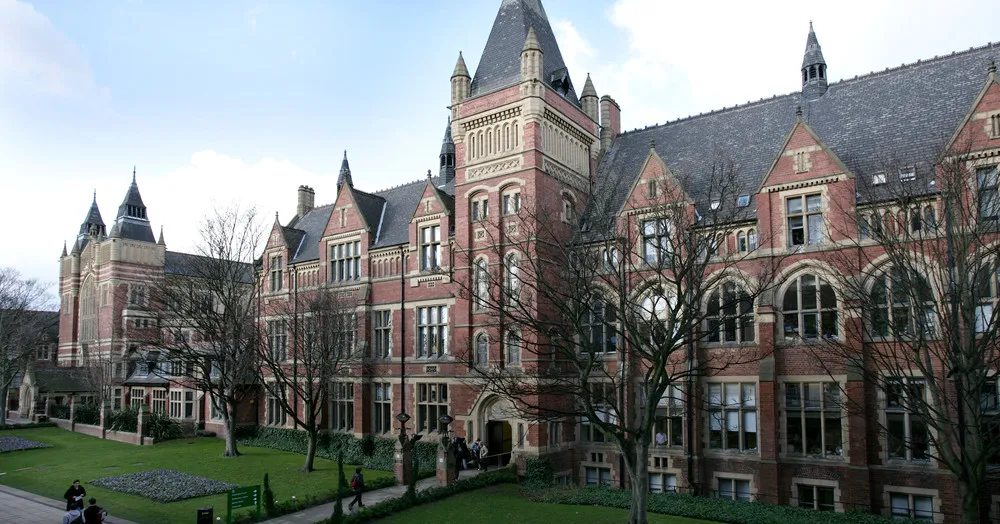 Photo: University of Leeds, via archglobals.com
This technological gap creates a vicious cycle. Researchers at under-equipped institutions struggle to generate preliminary data necessary for major grant applications, reducing their ability to secure funding for equipment upgrades. Meanwhile, well-equipped institutions attract additional resources, widening the capability gap.
The pharmaceutical industry has noticed these disparities. Dr Michael Foster, research director at a major drug company, explains their collaboration decisions: "We partner with institutions that can deliver the imaging quality our regulatory submissions require. Unfortunately, that limits our options to a handful of British universities."
The Maintenance Trap
Even universities with relatively modern equipment face mounting challenges from deferred maintenance and service contract costs. Electron microscopes require precise environmental control, regular calibration, and specialist technical support—expenses that have escalated dramatically as manufacturers consolidate and older instruments require increasingly rare components.
The University of Edinburgh's experience illustrates these pressures. Their 2010 transmission electron microscope requires annual service contracts costing £45,000, while replacement components often involve months-long delays as suppliers prioritise newer models.
"We're spending more on maintenance than some universities spend on entire research programmes," notes Dr Helen Thompson, the facility's technical director. "Yet without that investment, the equipment becomes unreliable precisely when researchers need it most—during critical experiments or manuscript preparation."
Some institutions have attempted creative solutions. The University of Glasgow established a regional consortium sharing maintenance costs across multiple institutions, while others have negotiated extended warranties or sought third-party service providers. However, these approaches often compromise response times or service quality.
Human Capital Concerns
Beyond equipment challenges, Britain faces a shortage of qualified electron microscopy specialists. Operating advanced microscopes requires extensive training in optics, materials science, and image analysis—skills that take years to develop and command high salaries in industrial settings.
Dr Robert Williams, who manages the electron microscopy facility at the University of Bath, describes recruitment difficulties: "Experienced microscopists can earn 50% more in industry than universities typically offer. We're competing for talent with semiconductor companies and pharmaceutical firms that offer better packages and newer equipment."
This skills shortage creates additional pressure on existing facilities. When specialist staff leave, their replacement often requires months of recruitment followed by extensive training periods during which equipment utilisation drops significantly.
The situation has prompted some universities to share specialist staff across multiple institutions or outsource complex imaging work to commercial providers—solutions that increase costs while reducing internal expertise.
Regional Disparities
The concentration of advanced electron microscopy capabilities in specific geographic regions exacerbates existing research inequalities. Scotland's universities, despite strong research profiles in relevant fields, operate predominantly older equipment that limits their competitiveness in international collaborations.
Professor David MacLeod, materials scientist at the University of Strathclyde, quantifies the impact: "Our researchers spend weeks travelling to facilities in England for imaging work that should take days. That travel time, combined with facility access costs, effectively doubles our research expenses while slowing project timelines."
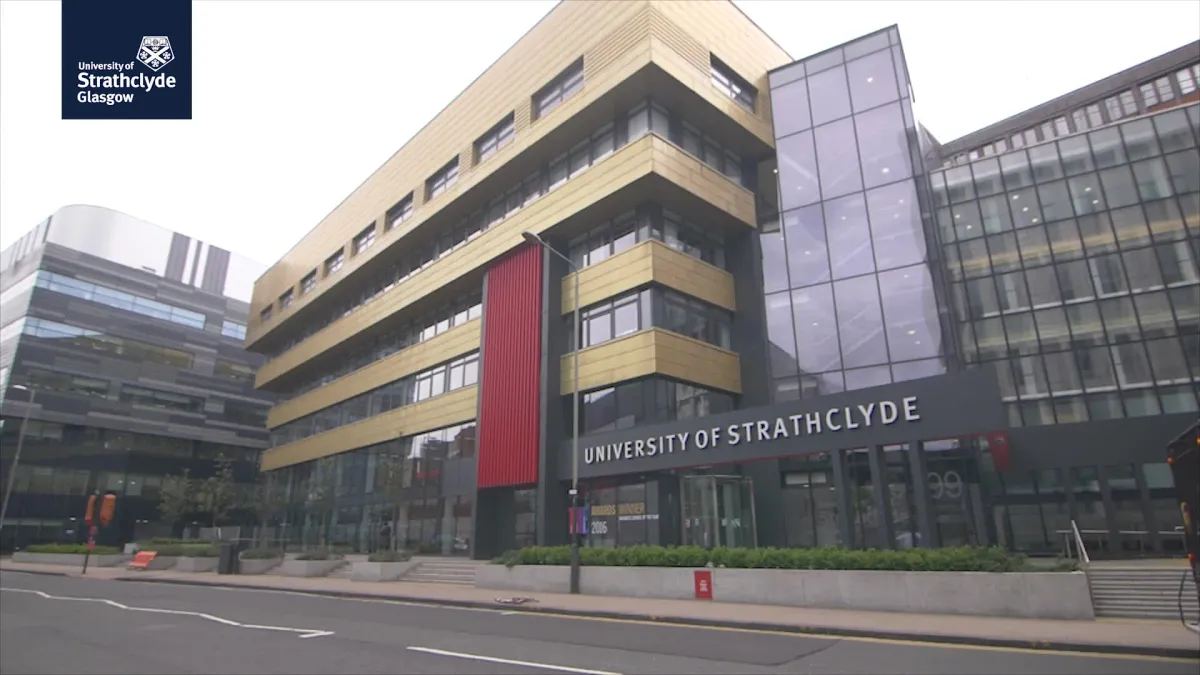 Photo: University of Strathclyde, via studyorbits.com
Similar patterns emerge across Northern England and Wales, where excellent research groups struggle with equipment limitations that compromise their output quality and international visibility.
A National Strategy?
Addressing Britain's electron microscopy challenges requires coordinated national action rather than institutional solutions. The Henry Royce Institute, established as a national centre for advanced materials research, provides one model for shared infrastructure investment.
"Centralised facilities can justify the £2-3 million investment required for cutting-edge equipment," explains Professor Philip Withers, the institute's scientific director. "But we need multiple regional hubs to serve Britain's research community effectively."
Some advocate for a national electron microscopy strategy similar to those implemented in South Korea and the Netherlands, where government investment has created networks of shared facilities serving multiple institutions.
The pharmaceutical and semiconductor industries, major beneficiaries of microscopy research, could contribute to such initiatives through public-private partnerships that ensure equipment access while supporting commercial research needs.
The Innovation Imperative
Britain's electron microscopy crisis reflects broader questions about research infrastructure investment and institutional inequality. As international competition intensifies and research problems require increasingly sophisticated analytical capabilities, outdated equipment becomes a strategic liability.
The solution requires recognising electron microscopy as essential infrastructure rather than optional enhancement. Just as Britain invested in synchrotron facilities and supercomputing capabilities, electron microscopy deserves coordinated national attention.
Professor Hartwell, still struggling with her ageing microscope, summarises the stakes: "We're training the next generation of scientists on equipment that was obsolete before they started university. That's not just unfair to them—it's economically shortsighted for the country."
As Britain seeks to maintain its position as a global science leader, the view through the electron microscope lens reveals both the scale of current challenges and the potential rewards of addressing them systematically. The question is whether policymakers will focus clearly enough to see what needs fixing.