The Critical Hour: When Geography Determines Survival
In the emergency department of a rural Scottish hospital, a 34-year-old patient arrives unconscious after ingesting an unknown substance at a house party. The attending physician faces a stark reality: whilst London's Guy's Hospital maintains round-the-clock toxicology specialists and advanced analytical equipment, this facility relies on telephone consultations and basic diagnostic tools that may take hours to provide answers.
This scenario exemplifies a troubling disparity within Britain's emergency healthcare system, where postcode determines access to life-saving toxicological expertise. Research conducted by the Royal College of Emergency Medicine reveals that patients presenting with poisoning cases outside major metropolitan areas face treatment delays averaging 73 minutes longer than their urban counterparts—a potentially fatal difference when dealing with rapidly-acting toxins.
The National Poisons Information Service: A Lifeline Under Strain
Established in 1963, the National Poisons Information Service (NPIS) represents Britain's primary defence against poisoning emergencies. Operating from four centres across Edinburgh, Birmingham, Newcastle, and Cardiff, the service fields approximately 150,000 enquiries annually from healthcare professionals seeking guidance on toxicological cases.
Dr Sarah Mitchell, consultant clinical toxicologist at Edinburgh's Royal Infirmary, explains the fundamental challenge: "We can provide expert advice within minutes, but that advice often requires laboratory confirmation or specialised antidotes that simply aren't available in smaller hospitals. The knowledge gap between what we know should be done and what can actually be delivered varies enormously across the country."
The service's TOXBASE database, accessible to registered healthcare professionals, contains detailed information on over 17,000 substances. However, frontline clinicians report significant limitations when confronting novel psychoactive substances (NPS) or synthetic compounds that emerge faster than database updates can accommodate.
Laboratory Capabilities: The Urban Advantage
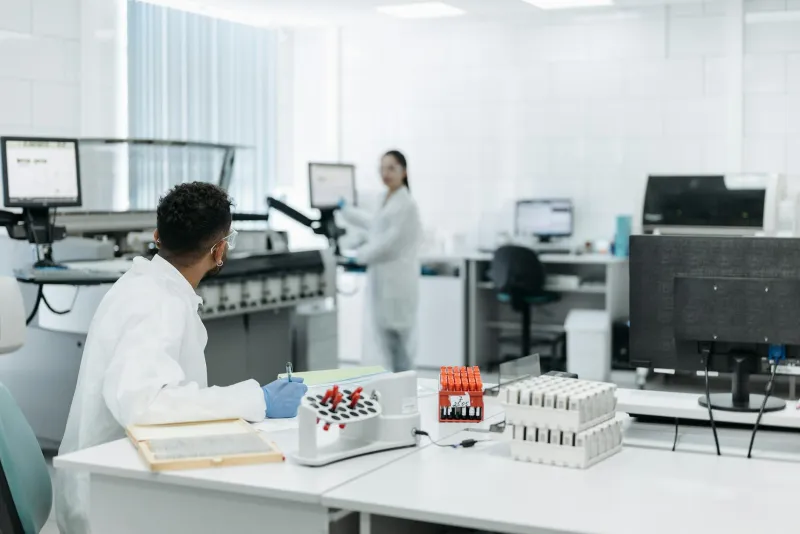
Britain's toxicological laboratory network reveals stark geographical inequalities. Major teaching hospitals in London, Manchester, and Birmingham maintain sophisticated mass spectrometry equipment capable of identifying unknown compounds within hours. These facilities employ dedicated analytical chemists and maintain extensive reference libraries of toxicological standards.
Conversely, district general hospitals serving rural populations often lack basic toxicological screening capabilities beyond standard drug-of-abuse panels. Dr James Crawford, emergency medicine consultant at Dumfries and Galloway Royal Infirmary, describes the practical implications: "We might suspect methanol poisoning, but without immediate laboratory confirmation, we're treating based on clinical suspicion alone. By the time samples reach a specialist laboratory, critical treatment windows may have closed."
The Royal College of Pathologists' 2023 workforce survey identified 47 consultant clinical biochemists with toxicological expertise across the UK—a number that has declined by 23% since 2015 due to retirement and recruitment difficulties. This shortage disproportionately affects peripheral hospitals, where specialist cover may be unavailable for weeks at a time.
Novel Substances: An Evolving Challenge
The emergence of synthetic cathinones, fentanyl analogues, and designer benzodiazepines has fundamentally altered Britain's toxicological landscape. The European Monitoring Centre for Drugs and Drug Addiction reports that 52 new psychoactive substances were identified in the UK during 2023 alone, each presenting unique diagnostic and therapeutic challenges.
Professor Amanda Richardson, director of the NPIS Birmingham unit, emphasises the complexity: "Traditional toxicology focused on a relatively stable set of compounds—paracetamol, aspirin, tricyclic antidepressants. Today's emergency departments encounter substances that didn't exist six months ago, with unknown pharmacokinetics and no established treatment protocols."
This challenge particularly affects hospitals without immediate access to advanced analytical capabilities. Standard immunoassays fail to detect most novel substances, requiring sophisticated techniques like liquid chromatography-tandem mass spectrometry (LC-MS/MS) that remain concentrated in specialist centres.
Regional Disparities: The Human Cost
Data obtained through Freedom of Information requests reveals concerning patterns in poisoning outcomes across different UK regions. Scotland's rural health boards report mortality rates for severe poisoning cases that are 34% higher than the national average, whilst treatment complications occur more frequently in hospitals located more than 50 miles from specialist toxicology centres.
These disparities extend beyond mortality statistics. Patients treated at hospitals without immediate toxicological expertise experience longer intensive care stays, increased rates of organ dysfunction, and higher healthcare costs per episode. The cumulative effect represents both individual tragedy and systemic inefficiency within the NHS.
Digital Solutions: Bridging the Expertise Gap
Innovative approaches are emerging to address these geographical inequalities. The University of Edinburgh's toxicology department has pioneered real-time video consultations that enable specialist physicians to guide treatment decisions remotely. Early results suggest this telemedicine approach can reduce treatment delays by up to 45 minutes in rural settings.
Similarly, portable analytical devices are beginning to transform point-of-care toxicology. Handheld spectrometers, whilst lacking the sensitivity of laboratory equipment, can identify major drug classes within minutes. The NHS Scotland pilot programme has deployed these devices to six remote hospitals, with preliminary data showing improved diagnostic confidence among emergency physicians.
Laboratory Networks: A Path Forward
The solution to Britain's toxicological divide may lie in coordinated laboratory networks that leverage existing capabilities more effectively. Professor Richardson advocates for a hub-and-spoke model: "Rather than expecting every hospital to maintain comprehensive toxicological capabilities, we should create rapid transport networks that can deliver samples to specialist laboratories within defined timeframes."
This approach would require significant investment in logistics infrastructure, including dedicated courier services and specimen preservation systems. However, modelling studies suggest that centralised high-throughput analysis could reduce per-test costs whilst improving diagnostic accuracy.
Recommendations for Reform
Addressing Britain's toxicological postcode lottery requires coordinated action across multiple domains. Immediate priorities include expanding telemedicine capabilities to ensure specialist consultation availability regardless of location, establishing regional antidote stockpiles to reduce treatment delays, and implementing standardised protocols that enable non-specialist physicians to initiate appropriate care pending expert guidance.
Longer-term solutions demand investment in analytical infrastructure and workforce development. Creating additional consultant toxicologist posts, particularly in underserved regions, represents a critical workforce priority. Simultaneously, advancing point-of-care diagnostic technologies could democratise access to rapid identification capabilities.
The stakes extend beyond individual patient outcomes. As novel psychoactive substances continue proliferating and environmental toxin exposures increase, Britain's capacity to respond effectively to poisoning emergencies becomes ever more crucial. Ensuring equitable access to toxicological expertise represents not merely a clinical imperative, but a fundamental question of healthcare justice in modern Britain.
The postcode lottery of poison control demands urgent attention from policymakers, healthcare leaders, and the scientific community. Only through coordinated effort can we ensure that geography no longer determines survival when seconds count and expertise saves lives.