The Invisible Masters of Modern Science
Within the gleaming corridors of Britain's premier research institutions, a quiet crisis unfolds. Behind every groundbreaking experiment, beneath every Nobel Prize-worthy discovery, lies the meticulous work of master craftspeople whose skills have been honed over decades. These are the scientific glassblowers who create bespoke apparatus, the electronics technicians who maintain million-pound spectrometers, and the precision machinists who fabricate components measured in micrometres.
Yet these custodians of laboratory excellence are vanishing. Across British universities and research institutes, the average age of specialist technical staff has crept steadily upwards, whilst apprenticeship programmes that once nurtured new generations have withered. The consequences threaten to undermine the very infrastructure upon which British scientific leadership depends.
At Cambridge University's Cavendish Laboratory, master glassblower Derek Fray embodies this demographic challenge. At 67, with arthritic hands that have shaped thousands of intricate vessels, he represents one of fewer than a dozen scientific glassblowers remaining in British academia. "When I started forty years ago, every major university had at least two or three of us," Fray reflects whilst crafting a custom reaction vessel. "Now, I field calls from institutions across the country because they simply cannot source the equipment their researchers require."
 Photo: Cambridge University's Cavendish Laboratory, via thecambridgetourcompany.co.uk
The Alchemy of Scientific Glasswork
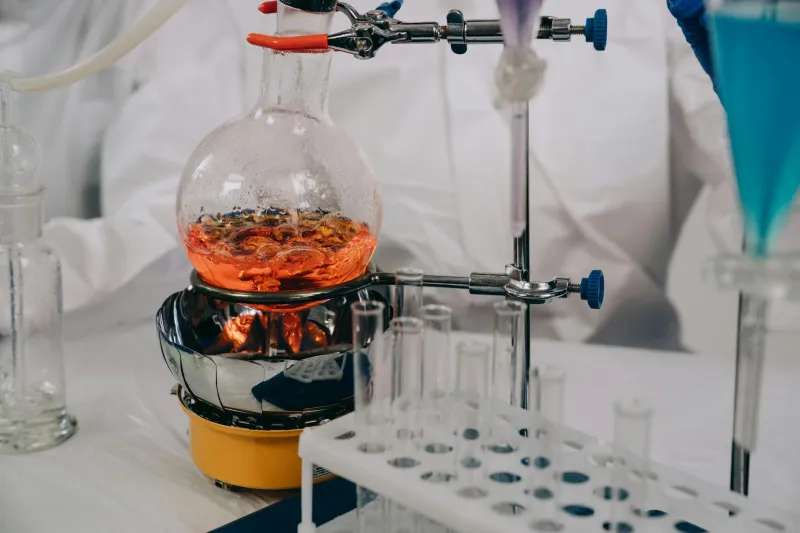
Scientific glassblowing represents perhaps the most endangered of laboratory trades. These artisans combine centuries-old techniques with cutting-edge scientific requirements, creating apparatus that commercial manufacturers cannot or will not produce. Custom reaction vessels for novel chemical syntheses, specialised optical components for laser systems, and intricate distillation apparatus for pharmaceutical research—all emerge from workshops that increasingly resemble museums.
The University of Edinburgh's chemistry department recently faced a six-month research delay when their lone glassblower retired unexpectedly. Commercial suppliers quoted delivery times exceeding twelve weeks for relatively standard apparatus, whilst bespoke components proved entirely unavailable. Professor Janet Morrison, whose organometallic research depends on custom-designed reaction vessels, describes the impact as "catastrophic."
 Photo: University of Edinburgh, via study-eu.s3.amazonaws.com
"People assume everything can be ordered online nowadays," Morrison explains. "But cutting-edge research requires unique solutions. When you're working at the boundaries of knowledge, off-the-shelf equipment simply doesn't exist."
The Royal Society of Chemistry's 2023 skills survey identified scientific glassblowing as critically endangered, with fewer than thirty practitioners remaining across British academia. More alarmingly, only three apprentices are currently training in the discipline nationwide—insufficient to replace even natural retirement rates.
Electronics Expertise in Terminal Decline
Whilst scientific glassblowing garners attention for its visible artistry, electronics technicians face equally severe workforce challenges with potentially broader consequences. These specialists maintain and modify the sophisticated instruments that underpin modern research, from electron microscopes to DNA sequencers.
Modern scientific instruments represent marvels of engineering complexity, often incorporating components from multiple manufacturers with proprietary interfaces and calibration requirements. When these systems fail, researchers face stark choices: expensive manufacturer service contracts, lengthy equipment replacement procedures, or the expertise of skilled electronics technicians who understand both the underlying physics and practical engineering constraints.
Robert Hayes, senior electronics technician at Oxford's Department of Materials, has witnessed the gradual erosion of technical expertise across British universities. "Twenty years ago, every department had a proper workshop with experienced technicians who could design, build, and repair almost anything," he recalls. "Now, universities see technical staff as cost centres rather than essential infrastructure."
The consequences extend beyond individual equipment failures. Research groups increasingly depend on commercial service contracts that can cost tens of thousands of pounds annually whilst providing limited flexibility for experimental modifications. Young researchers, lacking exposure to technical problem-solving, graduate with theoretical knowledge but minimal practical skills.
The Precision Machining Predicament
Precision machining represents another critically endangered skill set within British research institutions. These craftspeople fabricate components to tolerances measured in thousandths of inches, creating everything from custom sample holders for electron microscopes to specialised mechanical assemblies for particle accelerators.
The ISIS Neutron and Muon Source at the Rutherford Appleton Laboratory employs some of Britain's most skilled precision machinists, whose work enables experiments impossible with commercial components. However, workshop supervisor Michael Thompson reports increasing difficulty recruiting qualified personnel.
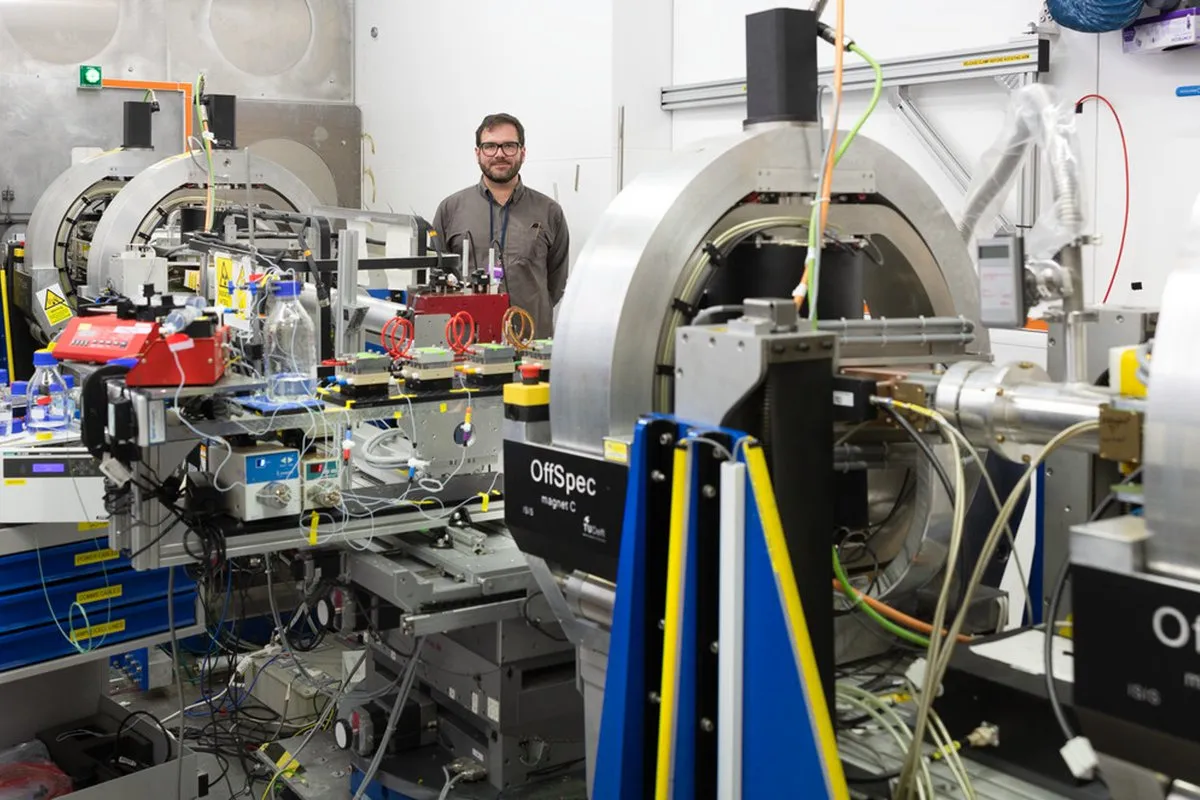 Photo: ISIS Neutron and Muon Source, via pbs.twimg.com
"The skills we require take years to develop," Thompson explains whilst examining a component destined for a neutron scattering experiment. "You cannot simply hire someone and expect them to work to our tolerances immediately. It requires understanding materials science, thermal expansion, and measurement techniques alongside traditional machining skills."
The decline in precision machining capabilities has forced many research groups to outsource component fabrication to commercial suppliers, often at considerable expense and with lengthy lead times. More concerning, the loss of in-house expertise reduces researchers' ability to iterate designs rapidly—a critical capability for experimental science.
The Apprenticeship Collapse
Traditionally, laboratory trades perpetuated through apprenticeship systems that combined formal education with hands-on mentorship. Master craftspeople took pride in training successors, ensuring knowledge transfer across generations whilst maintaining professional standards.
This system has largely collapsed. Universities, facing budget pressures, view apprenticeship programmes as expensive luxuries rather than essential investments. Professional bodies that once coordinated training have withered, whilst young people increasingly pursue university degrees over technical trades.
The Institute of Science & Technology's 2024 workforce survey revealed that fewer than fifty laboratory craft apprenticeships commenced across all of Britain during the previous academic year. This compares unfavourably with Germany, where over 800 such positions were filled during the same period.
"We've created a false hierarchy that prioritises academic qualifications over practical skills," argues Dr Patricia Williams, former Director of Technical Services at Imperial College London. "The result is a generation of researchers who understand theory but cannot translate it into working apparatus."
International Comparisons Reveal Systemic Weaknesses
Britain's technical skills crisis contrasts sharply with approaches adopted by international competitors. German universities maintain robust technical apprenticeship programmes integrated with regional industry clusters. Switzerland's federal institutes employ dedicated technical career tracks that provide advancement opportunities equivalent to academic pathways.
The Max Planck Society, Germany's premier research organisation, employs over 2,000 technical specialists across various disciplines. These positions offer competitive salaries, professional development opportunities, and recognition as essential contributors to scientific discovery. Consequently, German research institutions rarely face the equipment crises that increasingly plague British counterparts.
Similarly, American national laboratories have invested heavily in technical workforce development through partnerships with community colleges and professional organisations. Argonne National Laboratory's apprenticeship programme has trained over 200 technical specialists during the past decade, ensuring continuity of critical skills.
Potential Solutions Require Coordinated Action
Addressing Britain's laboratory skills crisis requires coordinated action across multiple stakeholders. Universities must recognise technical staff as essential infrastructure rather than expendable costs, whilst government policy should incentivise apprenticeship programmes through targeted funding mechanisms.
The Royal Academy of Engineering has proposed establishing regional centres of excellence that could provide technical training and services to multiple institutions. Such centres might achieve economies of scale impossible for individual universities whilst maintaining critical skill sets.
Professional recognition also requires enhancement. Technical specialists should receive career advancement opportunities, competitive compensation, and acknowledgement of their contributions to scientific discovery. Several European countries have established technical fellowship programmes that provide status equivalent to academic positions.
Conclusion: Preserving the Foundation of Discovery
Britain's scientific excellence rests upon foundations built by generations of skilled craftspeople whose expertise enables theoretical knowledge to become experimental reality. The current crisis—characterised by an ageing workforce, collapsed apprenticeship systems, and institutional neglect—threatens to undermine decades of research investment.
Recovery requires acknowledging that technical skills represent irreplaceable national assets deserving protection and cultivation. Without master glassblowers, electronics technicians, and precision machinists, Britain's laboratories risk becoming museums of unfulfilled potential rather than engines of discovery.
The choice facing British science is stark: invest in preserving and developing technical expertise, or accept gradual decline in research capability as essential skills vanish with retiring craftspeople. Time remains for corrective action, but the window narrows with each passing year.