The Forgotten Formulary
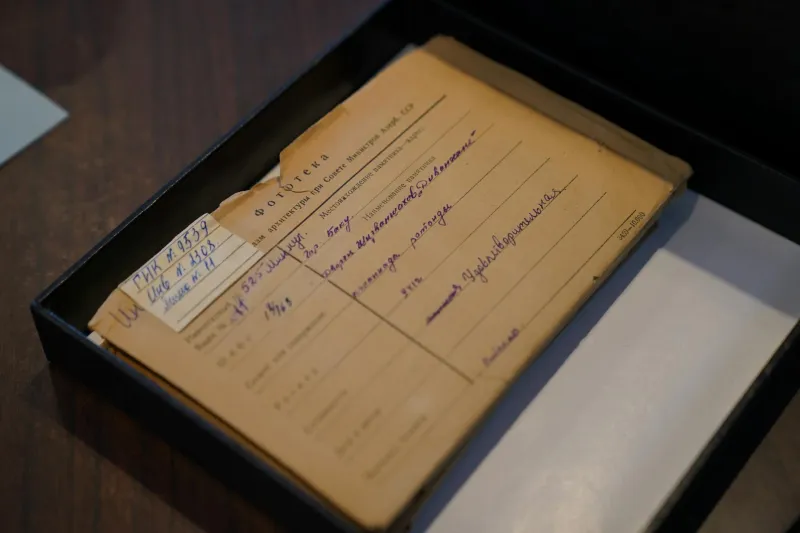
In the basement of a Victorian warehouse in Macclesfield, Dr Elena Kowalski carefully opens a leather-bound notebook dated 1923. The pages, brittle with age, contain the handwritten observations of a Zeneca chemist documenting failed attempts to synthesise antimalarial compounds. Each entry, meticulously recorded in fountain pen ink, describes molecular modifications that produced no therapeutic benefit—experiments deemed unsuccessful and never formally published.
Yet to Kowalski, a medicinal chemist turned pharmaceutical archivist, these "failed" experiments represent invaluable intelligence for modern drug discovery. "Every negative result tells us something important about molecular structure and biological activity," she explains, photographing each page with specialised equipment designed to capture fading text without damaging fragile paper.
Kowalski's work represents a race against time occurring across Britain's pharmaceutical landscape, where decades of handwritten research notes face extinction through physical deterioration, institutional neglect, and the relentless march of digital transformation.
The Scale of Vanishing Knowledge
Britain's pharmaceutical heritage encompasses one of the world's most comprehensive collections of drug discovery documentation. Companies including GlaxoSmithKline, AstraZeneca, and their numerous predecessor firms have generated millions of pages of laboratory notebooks spanning more than a century of medicinal chemistry research.
These archives contain far more than successful drug development stories. The vast majority document experiments that failed to yield marketable products—research that was methodologically sound but commercially unviable. In the traditional publishing paradigm, such work rarely appeared in scientific journals, creating a massive repository of "grey literature" that exists nowhere else.
Dr James Whitmore, who leads the pharmaceutical heritage project at the University of Cambridge, estimates that less than 20% of historical drug discovery research has been formally published. "We're looking at potentially 80% of British pharmaceutical research that exists only in handwritten form, much of it deteriorating rapidly," he notes.
 Photo: University of Cambridge, via static.dezeen.com
Physical Deterioration and Chemical Decay
The urgency stems from the fundamental chemistry of paper and ink degradation. Notebooks from the early twentieth century were typically written on wood-pulp paper with fountain pen inks containing iron compounds. Over decades, these materials undergo complex chemical reactions that cause pages to yellow, text to fade, and paper to become increasingly brittle.
Conservation scientist Dr Amelia Richardson has been studying deterioration patterns in pharmaceutical archives across Britain. Her research reveals that notebooks stored in typical warehouse conditions lose approximately 2% of their legible text each year through various degradation mechanisms.
"We're seeing pages where entire paragraphs have faded to illegibility," Richardson explains. "In some cases, only the carbon-based pencil annotations remain readable whilst the original ink observations have vanished completely."
The situation is particularly acute for notebooks containing chemical structures drawn with early synthetic inks, where the molecular diagrams—often the most valuable information—prove most susceptible to fading.
Hidden Treasures in Plain Sight
The archival notebooks contain remarkable insights that could inform contemporary drug discovery. Dr Kowalski's team has uncovered detailed records of synthetic routes for compounds that modern computational chemistry suggests might possess anti-cancer properties—work that was abandoned in the 1960s when screening technology couldn't detect such activity.
Similarly, notebooks from ICI's pharmaceutical division contain extensive documentation of failed anti-inflammatory compounds that, when analysed using modern molecular modelling techniques, show promise for treating neurodegenerative diseases—conditions that weren't well understood when the original research was conducted.
"These chemists were incredibly thorough," notes Dr Whitmore. "They documented every synthetic step, every purification attempt, every biological test result. It's a level of methodological detail that often exceeds what we see in modern publications."
The Digital Preservation Challenge
Transforming handwritten notebooks into searchable digital archives requires sophisticated technology and considerable expertise. The process involves high-resolution photography under carefully controlled lighting conditions, followed by optical character recognition software specifically trained to interpret early twentieth-century handwriting styles.
Chemical structures pose particular challenges, as they require specialist software capable of converting hand-drawn molecular diagrams into modern chemical notation systems. Dr Kowalski's team has developed custom algorithms that can interpret faded structural drawings and convert them into contemporary chemical databases.
The cost per notebook page ranges from £15 to £40, depending on condition and complexity. With some pharmaceutical collections containing over 100,000 pages, the financial requirements for comprehensive digitisation are substantial.
Institutional Priorities and Commercial Pressures
Many pharmaceutical companies view historical archives as costly storage burdens rather than valuable intellectual assets. Corporate mergers and acquisitions have scattered collections across multiple locations, often without proper cataloguing or preservation protocols.
Dr Sarah Mitchell, who manages archival collections for a major pharmaceutical company, describes the competing priorities: "Companies are focused on current pipeline development and regulatory compliance. Historical notebooks don't generate immediate revenue, so they're often relegated to minimal-cost storage until space pressures force disposal decisions."
Several significant collections have already been lost to corporate restructuring or simple neglect. When Fisons pharmaceutical division was dissolved in the 1990s, decades of research notebooks were reportedly discarded as the company focused on digital record management for its remaining operations.
Academic and Industrial Collaboration
Recognising the urgency, several British universities have established partnerships with pharmaceutical companies to preserve and digitise historical collections. The Wellcome Trust has provided funding for pilot projects that demonstrate the research value of archived pharmaceutical notebooks.
 Photo: Wellcome Trust, via www.guthriedouglas.com
These collaborations face complex intellectual property considerations. While historical patents have typically expired, companies remain cautious about revealing detailed synthetic methodologies that might inform competitors' research strategies.
Dr Whitmore's team has developed protocols that allow academic researchers to access notebook content for fundamental research whilst protecting commercially sensitive information through carefully structured confidentiality agreements.
Future Applications and Research Potential
The preserved notebooks are already yielding unexpected insights for modern drug discovery. Machine learning algorithms trained on historical synthetic routes have identified novel approaches to producing existing pharmaceuticals more efficiently.
Moreover, the detailed failure documentation provides valuable negative data that can guide contemporary research away from unproductive molecular modifications—potentially saving millions in development costs.
"Every failed experiment from 1925 is a hypothesis we don't need to test again in 2024," explains Dr Kowalski. "That represents enormous value for modern drug discovery programmes."
The Race Against Time
With deterioration accelerating and institutional memory fading, the window for preserving Britain's pharmaceutical heritage is rapidly closing. Many of the chemists who created these notebooks have passed away, taking with them contextual knowledge that could illuminate ambiguous entries or unexplained experimental choices.
Dr Richardson's conservation research suggests that notebooks currently in poor condition may become completely illegible within the next decade without immediate intervention.
The preservation effort represents more than historical curiosity—it embodies a recognition that scientific knowledge, once lost, cannot be recreated. As Britain seeks to maintain its position in global pharmaceutical innovation, these forgotten archives may hold keys to therapeutic breakthroughs that their original creators never imagined possible.