The Vanishing Act: Where Women Disappear from Science
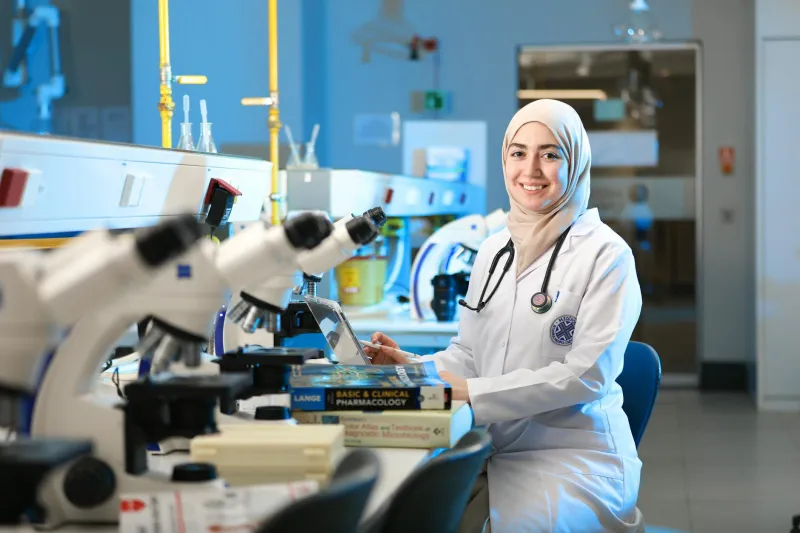
British science exhibits a troubling pattern that has persisted despite decades of equality initiatives: women enter research careers in substantial numbers but virtually disappear from senior leadership positions. The most critical juncture occurs during the transition from postdoctoral researcher to principal investigator—a career stage where systemic barriers converge to create what researchers term the "leaky pipeline" phenomenon.
Recent Higher Education Statistics Agency (HESA) workforce data reveals the stark reality. Women comprise 54% of PhD graduates in life sciences, yet hold only 28% of professorial positions in the same fields. More concerning still, the attrition rate accelerates precisely at the career stage when researchers typically establish independent research programmes and compete for major grant funding.
Dissecting the Data: Evidence of Structural Barriers
The numerical evidence paints a clear picture of systemic disadvantage. According to UKRI funding statistics, women submit 35% of fellowship applications but receive only 31% of awards—a gap that widens significantly for prestigious investigator awards and large programme grants. The discrepancy becomes more pronounced in physics and engineering, where women represent fewer than 20% of senior academic positions.
Professor Janet Williams, Pro-Vice-Chancellor for Research at the University of Bristol, contextualises these figures: "The data tells a story that individual anecdotes cannot capture. We're not discussing isolated cases of bias but systematic patterns that reproduce inequality at scale. The transition from postdoc to principal investigator represents a bottleneck where cumulative disadvantages crystallise into career-limiting outcomes."
 Photo: University of Bristol, via images.squarespace-cdn.com
The timing of this career transition coincides with life stages when women disproportionately assume caregiving responsibilities, creating compound pressures that male colleagues rarely experience. Research by the Royal Society indicates that women are twice as likely as men to cite work-life balance concerns when leaving academic careers.
The Athena SWAN Framework: Progress or Performance?
The Athena SWAN Charter, established to advance gender equality in higher education, represents Britain's most comprehensive attempt to address academic gender disparities. Over 160 UK institutions hold Athena SWAN accreditation, implementing action plans designed to remove barriers to women's career progression.
However, recent evaluations question whether these initiatives produce genuine structural change or merely institutional compliance exercises. Dr Sarah Peterson, who leads diversity research at Imperial College London, observes: "Athena SWAN has undoubtedly raised awareness and prompted important conversations. Yet the fundamental metrics—women's representation in senior positions, grant funding success rates, publication patterns—show disappointingly modest improvement despite substantial institutional investment."
 Photo: Imperial College London, via 4.bp.blogspot.com
The framework's emphasis on numerical targets and action plans may inadvertently encourage superficial responses rather than addressing deeper cultural and structural issues. Some institutions report "Athena SWAN fatigue," where equality initiatives become bureaucratic exercises disconnected from meaningful change.
Invisible Barriers: The Hidden Curriculum of Academic Advancement
Beyond explicit discrimination lies a complex web of informal practices and cultural norms that systematically disadvantage women in academic science. Research networks, collaboration opportunities, and mentorship relationships often develop through social interactions that exclude women or position them as peripheral participants.
Dr Rebecca Chen, a former postdoctoral researcher who transitioned to industry after unsuccessful fellowship applications, describes her experience: "The formal requirements for career advancement seemed clear—publications, grants, presentations. But the informal requirements—the networking, the visibility, the confident self-promotion—operated according to unwritten rules that nobody explained. Male colleagues seemed to navigate these dynamics intuitively."
Peer review processes, fundamental to grant funding and publication decisions, exhibit documented gender biases. Studies of UKRI grant applications reveal that reviewers consistently rate identical research proposals lower when attributed to female applicants, particularly in fields where women remain underrepresented.
The Motherhood Penalty and Career Timing
The intersection of biological clocks and academic career trajectories creates unique challenges for women in science. The typical timeline for establishing research independence—securing fellowships, building research programmes, achieving tenure—coincides precisely with peak fertility years, forcing women to navigate competing pressures that male colleagues rarely confront.
Professor Emma Thompson, Director of the Centre for Science Policy at the University of Cambridge, emphasises the systemic nature of this challenge: "We've designed academic career structures around assumptions of uninterrupted commitment and geographic mobility that disadvantage anyone with significant caregiving responsibilities. This isn't about individual choices but about institutional structures that embed particular lifestyle assumptions."
 Photo: University of Cambridge, via univers-british.u.n.pic.centerblog.net
Maternity leave policies, whilst legally protected, often fail to account for the cumulative impact of career interruptions on research productivity and competitive positioning. The COVID-19 pandemic exacerbated these disparities, with evidence suggesting that women's research output declined more substantially than men's during lockdown periods.
International Comparisons and Policy Innovations
Examining international approaches reveals alternative models for supporting women's research careers. Scandinavian countries, with more generous parental leave policies and stronger cultural support for work-life balance, demonstrate higher rates of women's retention in academic science.
The Wallenberg Foundation in Sweden has implemented innovative fellowship schemes that explicitly account for career interruptions, extending eligibility criteria and providing additional support for researchers returning from parental leave. Such approaches recognise that equality requires more than identical treatment—it demands acknowledgement of different starting points and structural barriers.
Institutional Innovation and Cultural Change
Some British institutions are pioneering approaches that move beyond compliance-based equality initiatives towards fundamental cultural transformation. The University of Edinburgh's "Returners Programme" provides structured support for researchers re-entering academic careers after breaks, whilst Cambridge University has established childcare support funds for conference attendance and research travel.
These innovations recognise that achieving gender equality requires addressing practical barriers alongside cultural change. However, their impact remains limited by broader structural constraints within the academic system.
The Business Case for Change
Beyond moral arguments for equality, compelling evidence demonstrates that gender-diverse research teams produce higher-quality science. Studies of research collaboration patterns show that mixed-gender teams generate more innovative research outputs and achieve higher citation rates than homogeneous groups.
The economic implications are substantial. Britain's investment in training female scientists represents significant public expenditure that generates poor returns when talented researchers abandon academic careers due to structural barriers. Improving retention rates would enhance research capacity whilst maximising return on educational investment.
Pathways to Transformation
Addressing Britain's gender imbalance in research leadership requires coordinated action across multiple levels. Funding bodies must examine their assessment criteria and review processes for embedded biases. Universities need to redesign career structures that accommodate diverse life patterns. Individual departments must create inclusive cultures that value different approaches to professional development.
Most importantly, change requires recognition that gender equality is not a women's issue but a systemic challenge that diminishes British science's potential. The expertise and perspectives that women bring to research leadership represent untapped resources that the nation cannot afford to waste.
The path forward demands sustained commitment, adequate resources, and willingness to challenge entrenched assumptions about academic careers. Britain's scientific future depends on creating conditions where talent, rather than gender, determines research leadership opportunities.