The Hidden Vulnerability
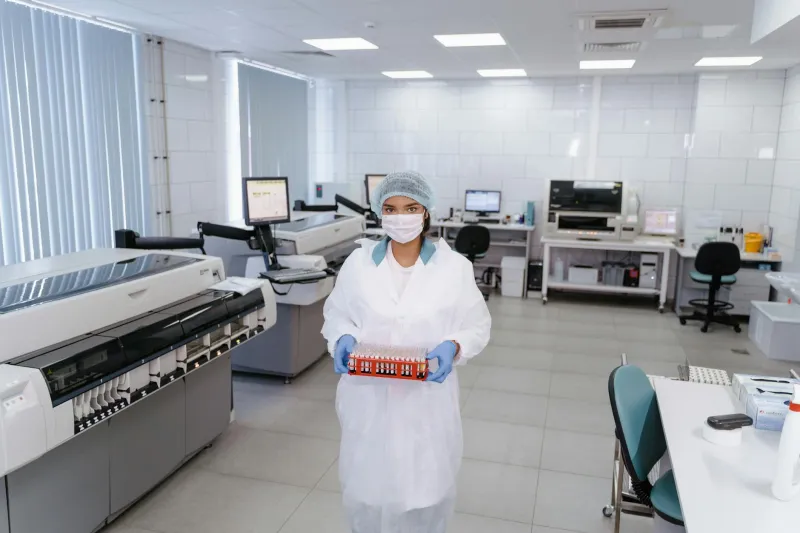
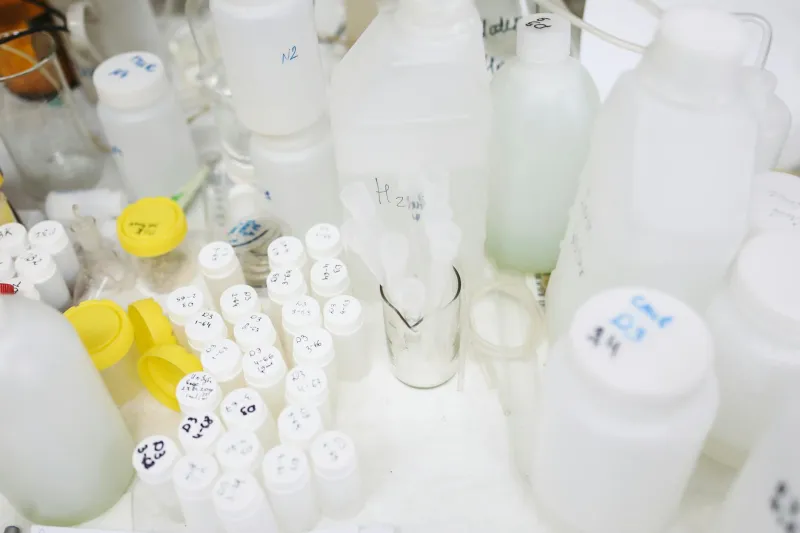
Dr Sarah Mitchell's cancer research ground to an abrupt halt last October when her laboratory at Imperial College London ran out of a specialised antibody reagent. The supplier, a German biotechnology firm, faced production delays that stretched from weeks into months. Her team's breakthrough work on novel therapeutic targets—research that had already consumed eighteen months and £200,000 in funding—simply stopped.
 Photo: Imperial College London, via famouswonders.com
"We had no alternative supplier," Mitchell explains. "This particular reagent is manufactured by only one company globally, and we discovered that dozens of laboratories across Britain were in exactly the same position."
Mitchell's predicament represents a growing crisis across British scientific research. The UK's laboratory ecosystem has evolved to depend heavily on just-in-time delivery of specialised chemicals and biological reagents from a handful of international suppliers, creating dangerous single points of failure that can paralyse entire research programmes.
Brexit's Unintended Consequences
The departure from the European Union has introduced additional friction into already fragile supply chains. Previously seamless movements of research materials now require extensive documentation, customs clearance, and often unexpected delays at border controls.
Professor James Hartwell, who leads the biochemistry department at the University of Edinburgh, has documented a 40% increase in supply disruptions since 2021. "Temperature-sensitive reagents that once arrived within 48 hours from European suppliers now routinely take five to seven days," he notes. "For materials with short shelf lives, this represents a fundamental challenge to experimental reproducibility."
 Photo: University of Edinburgh, via cdn.britannica.com
The situation has been exacerbated by the concentration of chemical manufacturing in Asia and continental Europe. British laboratories, which once enjoyed privileged access to European research supply networks, now find themselves at the end of increasingly complex logistics chains.
The Domestic Production Desert
Perhaps most concerning is Britain's diminished capacity for domestic chemical production. The closure of several major pharmaceutical manufacturing facilities over the past decade has left the country with limited ability to produce even basic research reagents independently.
Dr Amanda Foster, a chemical engineer at the University of Cambridge, has been mapping Britain's reagent production landscape. Her preliminary findings reveal that fewer than 15% of commonly used laboratory chemicals are manufactured within the UK.
 Photo: University of Cambridge, via static.dezeen.com
"We've essentially outsourced our chemical independence," Foster argues. "When global supply chains function smoothly, this model appears efficient. But when disruptions occur—whether from geopolitical tensions, natural disasters, or trade disputes—British research becomes hostage to forces entirely beyond our control."
Hidden Costs and Compromised Science
The impact extends far beyond simple delays. Researchers increasingly report making suboptimal experimental choices based on reagent availability rather than scientific merit. Dr Mitchell's team, for instance, has begun designing experiments around chemicals they can reliably source rather than those best suited to their research questions.
"We're essentially allowing supply chain considerations to drive scientific methodology," she explains. "This represents a fundamental compromise of the research process that will inevitably affect the quality and reproducibility of British science."
The financial implications are equally troubling. Emergency procurement of alternative reagents often costs three to five times standard pricing, while project delays can trigger funding complications that threaten entire research programmes.
Institutional Responses and Systemic Solutions
Some institutions have begun developing strategic reagent stockpiles, but this approach creates its own challenges. Many research chemicals have limited shelf lives, making long-term storage impractical and expensive.
The Wellcome Trust has initiated discussions about establishing a national strategic reserve of critical research materials, similar to emergency medical stockpiles. However, the diversity and specificity of research reagents makes such an approach logistically complex.
Professor Hartwell advocates for a more fundamental restructuring of Britain's research supply ecosystem. "We need policies that incentivise domestic production of critical research materials," he suggests. "This might require government intervention similar to what we've seen in semiconductor manufacturing or renewable energy."
Building Resilience
The solution may require a combination of strategic stockpiling, supplier diversification, and renewed investment in domestic chemical manufacturing capacity. Some universities have begun forming purchasing consortiums to negotiate with multiple suppliers and share risk across institutions.
The government's recent announcement of £2 billion in research infrastructure investment includes provisions for supply chain resilience, though critics argue the funding remains insufficient to address systemic vulnerabilities.
Dr Foster's research suggests that establishing even modest domestic production capacity for the 50 most critical research reagents could significantly reduce British science's exposure to supply disruptions. "We're not talking about complete self-sufficiency," she clarifies, "but rather strategic redundancy that ensures research continuity during global supply chain stress."
The Path Forward
As British research institutions grapple with these challenges, the need for coordinated action becomes increasingly urgent. The current model of dispersed, reactive procurement leaves individual laboratories vulnerable to forces entirely beyond their control.
The stakes extend well beyond laboratory inconvenience. Britain's scientific competitiveness depends on researchers' ability to pursue ambitious, time-sensitive projects without the constant threat of supply chain disruption. Addressing this vulnerability will require unprecedented cooperation between government, industry, and academic institutions to rebuild the resilient research infrastructure that British science demands.