A Victorian Legacy Beneath Our Feet
In the laboratories and storage facilities across Britain, millions of soil samples rest in carefully catalogued collections, some dating back to the reign of Queen Victoria. These seemingly mundane specimens represent one of the world's most valuable environmental archives, yet many remain underutilised whilst facing mounting preservation challenges.
The crown jewel of Britain's soil heritage lies at Rothamsted Research in Hertfordshire, where the Broadbalk Wheat Experiment has been continuously monitored since 1843. This extraordinary longitudinal study predates Darwin's Origin of Species by sixteen years, making it older than the telephone, the light bulb, and the internal combustion engine. What began as a simple investigation into crop fertilisation has evolved into an irreplaceable window into environmental change spanning nearly two centuries.
The Science of Retrospective Discovery
The true power of these historical collections lies not in what researchers originally sought to measure, but in what modern analytical techniques can now detect. Soil samples collected in the 1850s, when industrial pollution was barely understood as a concept, now serve as pristine baseline measurements for heavy metal contamination, persistent organic pollutants, and isotopic signatures that reveal climate patterns.
Dr Sarah Mitchell, a soil geochemist at Imperial College London, explains the phenomenon: "We're essentially conducting experiments that began before our great-great-grandparents were born. These samples allow us to measure environmental changes that nobody could have anticipated when they were first collected."
Modern mass spectrometry can detect trace elements at parts-per-billion levels in samples that Victorian scientists could barely analyse for basic nutrients. Radiocarbon dating, stable isotope analysis, and molecular techniques have transformed dusty museum specimens into high-resolution environmental sensors spanning decades or centuries.
Mapping Britain's Environmental Transformation
Recent research using archived soil samples has revealed startling insights into Britain's environmental history. Analysis of samples from the 1920s shows mercury levels in agricultural soils were already elevated compared to pre-industrial baselines, whilst post-war samples document the dramatic increase in synthetic pesticide residues during the 1960s agricultural revolution.
The Countryside Survey, conducted every decade since 1978, has created a systematic grid of soil samples across Britain that functions as a national environmental monitoring system. When combined with earlier ad-hoc collections, these samples reveal how factors from acid rain to climate change have altered soil chemistry across different regions and land uses.
Perhaps most significantly, these collections provide crucial baseline data for assessing current environmental policies. Without historical context, it becomes impossible to determine whether contemporary soil health initiatives are succeeding or whether apparent improvements merely reflect natural variation.
The Preservation Crisis
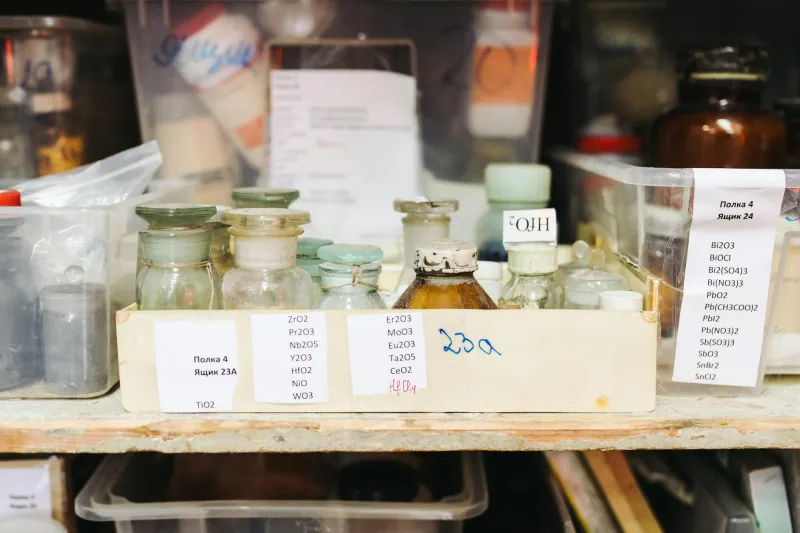
Despite their scientific value, many of Britain's soil archives face an uncertain future. Storage costs, institutional reorganisations, and competing research priorities threaten collections that cannot be recreated or replaced. Unlike laboratory experiments that can be repeated, these samples represent unique moments in environmental history.
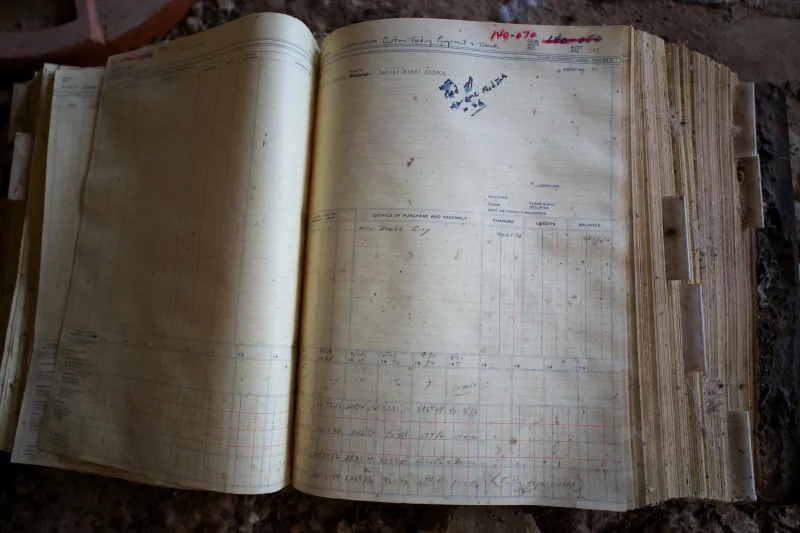
The challenge extends beyond mere physical preservation. Many collections lack comprehensive digital catalogues, making it difficult for researchers to locate relevant samples. Metadata describing collection methods, storage conditions, and previous analyses often exists only in handwritten logbooks or the memories of retired researchers.
Funding represents perhaps the greatest threat. Maintaining climate-controlled storage facilities, updating cataloguing systems, and supporting curatorial staff requires sustained investment that rarely attracts the attention of grant committees focused on novel research proposals.
A National Strategy for Soil Heritage
Recognising these challenges, soil scientists across Britain are calling for a coordinated national approach to preserve and maximise access to historical soil collections. The proposed strategy would establish standardised cataloguing systems, create digital databases linking collections across institutions, and develop protocols for sample sharing between researchers.
Such coordination already exists in other scientific domains. The UK Biobank has demonstrated how systematic sample collection and sharing can accelerate research across multiple disciplines. A similar approach for soil samples could unlock research potential whilst ensuring long-term preservation.
The strategy would also address geographical gaps in existing collections. Whilst agricultural research stations have maintained excellent records, urban soils, coastal environments, and upland regions remain underrepresented in historical archives.
Technology Meets Tradition
Emerging analytical techniques promise to extract even greater value from historical soil samples. Environmental DNA analysis can now identify past plant and microbial communities from soil samples, whilst advanced isotopic techniques reveal information about historical precipitation patterns and temperature regimes.
Artificial intelligence and machine learning algorithms are being developed to identify patterns across vast datasets of soil analyses, potentially revealing environmental connections that would remain invisible to human researchers working with smaller sample sets.
The Path Forward
Britain's soil sample archives represent an irreplaceable scientific resource that continues to yield new insights with each technological advance. However, realising their full potential requires coordinated action to preserve existing collections, expand systematic sampling, and improve access for researchers.
The investment required pales in comparison to the value these collections provide for understanding environmental change, informing policy decisions, and training future generations of environmental scientists. As climate change accelerates and environmental pressures intensify, the baseline data locked within Britain's soil archives becomes increasingly precious.
The question facing the British scientific community is not whether these collections are valuable—their importance grows with each passing year. Rather, the challenge lies in ensuring that future researchers will have access to this underground archive of environmental history, and that Britain's unique contribution to global environmental science continues to inform our understanding of a changing world.