The Postcode Lottery of Medical Testing
When Margaret Thompson received conflicting cholesterol readings from two different laboratories within a week, she assumed one had made an error. The reality was more troubling: both results were technically correct according to their respective accreditation standards, yet they differed by enough to alter her treatment recommendations.
Thompson's experience illustrates a growing problem within Britain's clinical laboratory sector, where fragmented oversight creates inconsistencies that can significantly impact patient care. Unlike the unified standards applied across many European healthcare systems, British laboratories operate under a complex web of accreditation schemes that vary dramatically in rigour and scope.
A System Without Unity
The United Kingdom Accreditation Service (UKAS) provides the gold standard for clinical laboratory certification, requiring extensive quality controls and regular proficiency testing. However, UKAS accreditation remains voluntary for many laboratory types, creating a two-tier system where standards depend on institutional choice rather than regulatory requirement.
NHS hospital laboratories typically maintain UKAS certification, but private diagnostic companies, point-of-care testing facilities, and workplace health providers often operate under less stringent frameworks. The Medicines and Healthcare products Regulatory Agency (MHRA) oversees some testing devices but not the laboratories that use them, while the Care Quality Commission focuses on clinical governance rather than analytical accuracy.
"We have multiple regulators looking at different aspects of the same process," explains Dr Robert Harrison, a clinical biochemist at Newcastle upon Tyne Hospitals. "It's like having different building inspectors check the foundation, walls, and roof separately—gaps inevitably emerge."
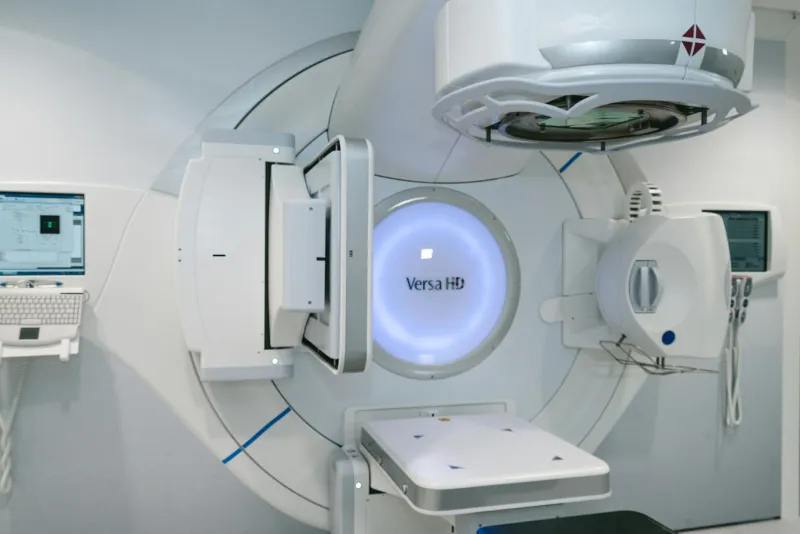
 Photo: Newcastle upon Tyne Hospitals, via www.ukmedinet.com
The Brexit Effect
Britain's departure from the European Union has quietly widened these regulatory gaps. Previously, UK laboratories could reference European Committee for Standardization (CEN) guidelines and participate in EU-wide proficiency testing schemes. Post-Brexit, these relationships have become more complex and expensive to maintain.
Some private laboratories have shifted towards American College of American Pathologists (CAP) standards, which differ from both UKAS and remaining European frameworks. Others have adopted ISO 15189 certification without the additional requirements that UKAS typically mandates.
"Brexit gave us regulatory freedom, but we haven't used it to create better standards," argues Professor Linda Davies, who studies healthcare quality systems at Manchester University. "Instead, we've allowed further fragmentation that ultimately serves no one's interests."
 Photo: Manchester University, via cdn.universitycompare.com
Real-World Consequences
The practical implications extend far beyond administrative complexity. A 2022 audit by the Royal College of Pathologists found significant variations in reference ranges and measurement uncertainty calculations across different laboratory types, even when testing identical samples.
For diabetes monitoring, some laboratories report HbA1c results with uncertainty margins of ±2%, while others use ±7%—a difference that could affect treatment decisions for thousands of patients. Cardiac enzyme measurements, crucial for heart attack diagnosis, show similar variations that could delay or complicate emergency care.
"I've seen cases where patients receive different diagnoses based on where their blood was tested," reports Dr Sarah Mitchell, an emergency medicine consultant in Birmingham. "When laboratory results influence life-changing medical decisions, these inconsistencies become more than statistical curiosities."
The Private Sector Challenge
Private healthcare's expansion has complicated the regulatory landscape further. High-street health checks, workplace screening programmes, and direct-to-consumer testing services operate under minimal oversight, yet their results increasingly influence NHS treatment pathways.
A patient who receives a cholesterol measurement from a workplace health programme might present those results to their GP, who must then interpret findings that may not meet NHS laboratory standards. Similarly, private health insurance companies often accept results from any accredited laboratory, regardless of the accreditation scheme used.
"We're seeing more patients arrive with test results we can't fully trust," explains Dr James Peterson, a GP in Leeds. "The patient assumes all laboratories are equivalent, but the reality is far more complex."
Point-of-Care Proliferation
The rise of point-of-care testing—diagnostic tests performed at the bedside rather than in central laboratories—has created additional regulatory challenges. These devices can provide rapid results that improve patient care, but their oversight varies dramatically across different healthcare settings.
GP surgeries using point-of-care devices for routine monitoring typically follow UKAS guidelines, but the same devices used in pharmacies or occupational health settings may operate under different standards. Emergency departments increasingly rely on point-of-care testing for critical decisions, yet the quality assurance programmes supporting these devices remain inconsistent.
International Comparisons
Germany's clinical laboratory system operates under unified federal oversight that ensures consistent standards across all testing facilities, regardless of ownership or location. France requires all laboratories performing tests that influence patient care to meet identical accreditation standards, with regular inspections enforced through a single regulatory body.
By contrast, Britain's fragmented approach creates administrative burden without delivering corresponding improvements in quality or patient safety. Laboratory managers must navigate multiple accreditation schemes while patients and clinicians struggle to interpret results that may not be directly comparable.
Professional Perspectives
The Institute of Biomedical Science has called for regulatory harmonisation that would establish minimum standards for all clinical testing, regardless of setting or ownership. The Association of Clinical Biochemistry and Laboratory Medicine supports mandatory UKAS accreditation for any laboratory performing tests that influence NHS treatment decisions.
"We need clarity about what 'accredited' actually means," argues Dr Harrison. "Patients deserve confidence that their test results meet consistent standards, whether they're tested in a hospital laboratory or a high-street clinic."
The Path to Reform
Addressing Britain's laboratory standards crisis requires political will to harmonise regulatory frameworks that have evolved separately over decades. The Department of Health and Social Care could mandate minimum accreditation standards for all clinical testing, while NHS England could require UKAS certification for any laboratory whose results influence NHS treatment pathways.
Such reforms would initially increase costs for some private providers but could reduce long-term expenses by preventing diagnostic errors and unnecessary repeat testing. More importantly, they would restore patient confidence in a healthcare system where laboratory results increasingly determine treatment decisions.
The question is whether Britain's policymakers recognise that measurement accuracy represents a fundamental healthcare infrastructure requirement, not merely an administrative preference. In an era of precision medicine and evidence-based treatment, diagnostic uncertainty undermines the entire healthcare system's credibility.